

Tomato Paste Quality


Tomato paste is a staple ingredient in cooking around the world. It is used in a variety of sauces, soups, stews, and other recipes. However, it should be noted that not all food manufacturers produce tomato paste of the same quality.
Some consumers often receive poor-quality tomato paste . So, how do you determine the quality and avoid buying low-grade goods? We are aware that some suppliers add starch, color, or other vegetable ingredients as desired by buyers, or as a cost-cutting measure. Typically, when ordering canned tomato paste, suppliers would send images of the goods first, followed by samples. Using these resources, we can assess the product’s quality.
Factors affecting the production of quality tomato paste
The quality of tomato paste depends on several critical factors. These factors range from the selection of raw materials to the processing techniques used. As a trusted tomato paste manufacturer, Royal Foods knows what it takes to deliver excellent quality tomato paste to consumers. Here we take a general look at the factors affecting the production of quality tomato paste:
1. Raw Material
The quality of tomato paste starts with the tomato itself. The most important things to consider when choosing the right tomato include:
- Tomato type: High-quality paste requires fleshy tomatoes with a high brix (natural sugar content) and a dark color. Products like Roma or San Marzano varieties have these characteristics.
- Freshness and Ripeness: For optimal flavor and consistency, tomatoes should be harvested at peak ripeness. Before they reach the spoilage stage.
- Flawless: Bruised, overripe, or unripe tomatoes can negatively impact the flavor and texture of the final product.
2. Processing Methods
The way tomatoes are processed significantly affects the quality and preservation of the flavor and nutrients of the final product. For example, in the Cold Break method, the flavor and freshness of the tomatoes are generally preserved more, but they are less concentrated than in the Hot Break method.
3. Evaporation Rate & Final Concentration
A quality tomato paste should be cooked to a final level of 28 to 32 percent natural tomato solids. Otherwise, the final product is considered a thin paste. Proper and sufficient heat and evaporation also ensures the concentration of the holly without the product reaching the burning stage.
4. No artificial Additives
The composition of a premium tomato paste only includes tomatoes and salt. No artificial thickeners or preservatives should be added to it.
Features of Premium Tomato Paste
Now we need to see how you, as a direct customer or consumer, can distinguish a high-quality tomato paste from a poor-quality one?
Color, Taste, & Aroma
These three are the most important visual characteristics of the product that will help you make a confident choice. The deep red color indicates a high level of lycopene (a powerful antioxidant). The tomato paste should also have a natural sweet and tangy flavor, not metallic or too sour. It should also be noted that the product smells like fresh tomatoes, not overcooked or fermented.
Packaging & Shelf Life
If the amount of tomato paste is large, Aseptic packaging is used for it. This type of packaging prevents oxidation and maintains the freshness of the product. Another model of packaging is BPA-free cans, which ensure that chemical washing does not affect the taste of the product. Finally, if a quality product is stored in a dry and cool place, it should remain unopened for 2 to 3 years and not spoil.
Certifications & Safety Standards
Be sure to look for these certifications on the packaging when choosing and purchasing tomato paste. A high-quality paste should have ISO and HACCP certifications (food safety standards), as well as non-GMO and organic certifications (if available). It should also be tested for heavy metals and pesticides.
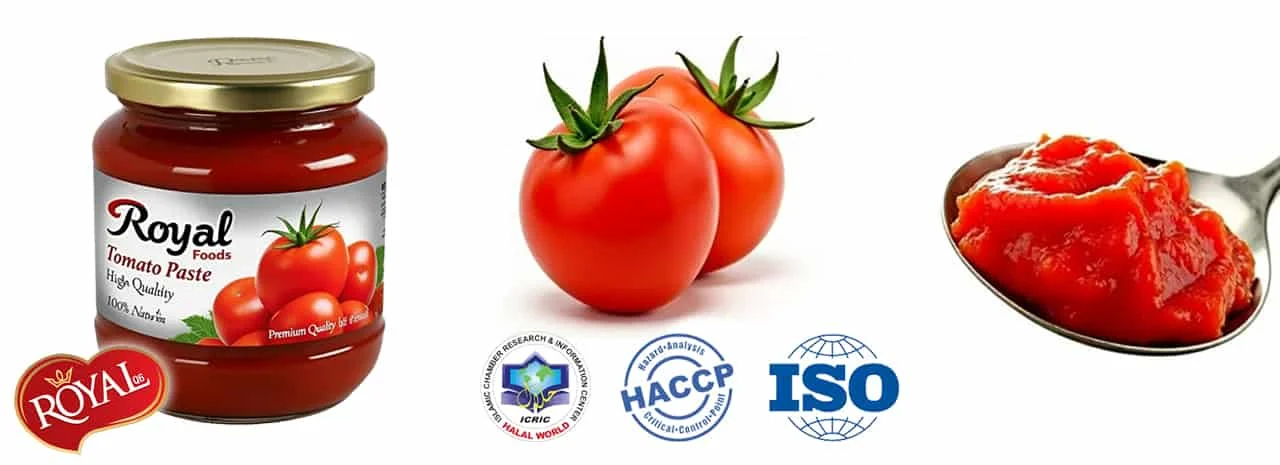
How can we be sure?
Depending on whether or not a tomato paste supplier is available to you, there are generally 2 ways to check the above:
Tomato Paste Quality with Photographs
In the beginning, we can roughly estimate the quality by looking at the photographs. Because of the high viscosity of modified starch, there will be a membranous layer between the granules of tomato paste that will reflect light if the starch level is higher. As a result, if the image exhibits a lot of light reflection, the tomato paste was thickened with starch.
Tomato Paste Quality with Test Sample
Second, we may taste the sample; if we put a spoonful of it in our mouth, the 100 percent pure tomato paste will dissolve like chocolate, leaving no residue. If there is residue, it means there are additional vegetable ingredients present.
Finally, we can use equipment to test the most essential nutritional fact, lycopene. A 100 percent pure 28-30% Brix tomato paste should have a lycopene concentration of more than 40mg/100g. If the percentage is lower, the purity is lower. In other words, if the sample was labeled as 28-30% Brix but the lycopene testing result was only 20mg/100g, the sample’s purity is only approximately 50%.
SO Why Choose Royal Foods Tomato Paste?
As a leading tomato paste producer, we guarantee:
- 100% Natural, No Additives
- High Brix (28-32%) for Richer Taste
- Aseptic Packaging for Maximum Freshness
- Strict Quality Control from Farm to Table
Whether you are a food supplier, a food industry manufacturer, or even a chef, quality tomato paste can make all the difference in your work and product. So choose wisely.