

Tomato Paste Nutrition Facts

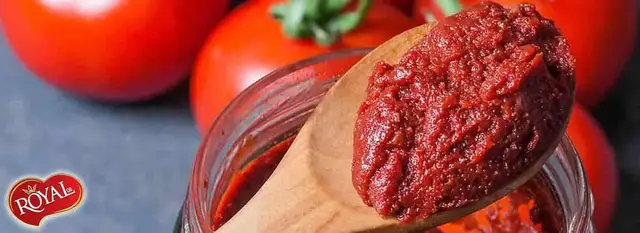
Tomato paste is not just a kitchen staple – it’s a rich source of essential vitamins, minerals and antioxidants. We’ve carefully processed our product to preserve the natural goodness of ripe tomatoes. In fact, due to its concentration, it’s even richer in lycopene, vitamin C and potassium than fresh tomatoes. Whether you’re a food producer looking for a nutrient-rich ingredient or a health-conscious consumer, tomato paste offers superior nutritional benefits along with greater shelf life and versatility. Let’s see how this vibrant red concentrate can enhance both the taste and health of your recipes and products.
Tomato Paste: A Nutrient-Dense Superfood
Tomato paste nutrition is rich in vitamins and minerals. It also contains other nutrients in varying amounts. For example, two tablespoons (32 grams) of tomato paste provides nearly 10% of the recommended daily intake of copper, potassium, and vitamin C, among other nutrients.
1. Comprehensive Vitamin Profile
Our tomato paste is not only rich in beneficial vitamins, but also contains an impressive range of bioavailable vitamins. Through advanced low-temperature processing, we retain up to 90% of the original vitamin content found in sun-ripened tomatoes.
Vitamin A (retinol equivalents):
One of the most important and abundant main ingredients of this product is vitamin A. It's about 1500 IU per 100 grams.
Roles:
- Supports vision health (slows down the process of macular degeneration)
- Strengthens immune system function (increases T-cell production)
- Maintains skin health (stimulates collagen synthesis)
Vitamin C (ascorbic acid)
What really sets our product apart is its resistance to vitamin C loss. While most processed foods lose this fragile nutrient, our paste retains 45 mg per 100 g (50% RDI) through proprietary evaporation technology. It's about 45 mg per 100 g (50% RDI).
Roles:
- Potent antioxidant (neutralizes free radicals)
- Increases iron absorption (converts Fe3+ to Fe2+)
- Collagen formation (cofactor for proline hydroxylation)
Vitamin K (Phylloquinone)
While tomato paste is known for its nutrition and lycopene content, our product contains significant amounts of vitamin K - a concentration that makes it one of the richest plant sources of this essential nutrient. It's about 15 mcg per 100g (12% RDI). This vitamin K is present in our paste in the following forms:
- Phylloquinone (K1) - the primary plant-derived form that accounts for approximately 85% of the total vitamin K content.
- Menaquinone-4 (K2) - a rare form converted by bacteria that accounts for the remaining 15% and is unusually present in a plant product.
Roles:
- Supports the blood coagulation system
- Optimizes bone metabolism (osteocalcin carboxylation)
- Protects the cardiovascular system (prevents arterial calcification)
B-Complex Vitamins
Our tomato paste nutrition contains a full spectrum of B vitamins, which are retained in our gentle concentration process.
Contents:
- 25 mcg folate (B9) per 100 grams
- 3 mg niacin (B3) per 100 grams
- 0.3 mg pyridoxine (B6) per 100 grams
- Thiamine (B1) and riboflavin (B2)
Roles:
- Natural Fortification
- Metabolic Support
- Heart & Brain Health
- Manufacturing Benefits
- Nutritional Synergy
- Prenatal/maternal health positioning (folate content)
2. Mineral Powerhouse
In addition to being rich in vitamins, our tomato paste offers a concentrated mineral matrix that modern diets often lack. For industrial applications, this mineral density allows for a significant reduction in sodium in processed foods, while maintaining the desired taste and increasing shelf life through natural acidity.
- Potassium: Its industrial advantage is that it replaces salt in processed foods. At the same time, it maintains the taste.
- Concentration: 1000 mg per 100 g (therapeutic levels) - equivalent to two bananas but with 40% less sugar.
- Iron: 3.5 mg non-heme iron per 100 g - Thanks to the natural synergy of vitamin C, it is made particularly bioavailable, offering food manufacturers a no-label solution for iron fortification.
3. Lycopene Superiority
Tomatoes are the best natural source of lycopene, a powerful antioxidant related to vitamin A. Our processing method also converts it into its most bioavailable form. This powerful antioxidant is 2.5 times more absorbable than fresh tomatoes, thanks to thermal isomerization that converts trans-lycopene to the cis form. It's about 30-50 mg per 100 grams (compared to 3 mg in fresh tomatoes).
Benefits:
- 25% reduced risk of prostate cancer (according to NIH studies)
- UV-protective effects (up to 40% reduction in skin redness)
- Reduced risk of stroke (more in men)
- Anti-inflammatory effects (reduces IL-6 by up to 35%)
Industrial-Grade Nutrition Facts
Our tomato paste is specifically formulated for food production. It meets stringent industry standards while maintaining exceptional nutrient density. Its 28-30° Brix concentration ensures consistent performance in everything from soups to snack coatings. Unlike synthetic alternatives, this product acts as a complete package including: natural preservative, umami enhancer and clean-label colorant.
Our bulk packaging options also extend the shelf life of this product for over 24 months.
Product Benefits for Food Manufacturers:
- Natural Color: Replaces Artificial Red 40 (E129)
- Flavour Enhancer: Umami-rich Glutamic Acid (1.2g/100g)
- Preservative Alternative: Acidic (pH 3.8-4.2) that inhibits the growth of C. botulinum.
Usage Tips: Maximizing Nutritional Impact
The packaging often includes tips for preserving nutrients for consumers. But here are some tips for maximizing the full nutritional potential of tomato paste. This way, you can use it in all your meals—from vitamin-fortified baby foods to athletes’ recovery drinks.
For food developers, we recommend the following:
- Add 10-15% to sauces/soups for full nutrient absorption
- Oil-based formulations to increase lycopene absorption by up to 300%
- Refrigerate after opening (reduces vitamin C degradation to less than 5% per month)
For food service:
Try to make tomato paste between 10-15% of the soup or sauce concentration to provide complete nutrition.
In bakery applications, sun-dried tomato paste preserves 95% of the vitamins in baked products.
For home consumers:
Combine with fats (olive oil) for optimal lycopene absorption.
Refrigerate after opening: Vitamin C loss is reduced to less than 5% per month compared to 20% at room temperature.