

Which Tomatoes are Best for Tomato Paste?

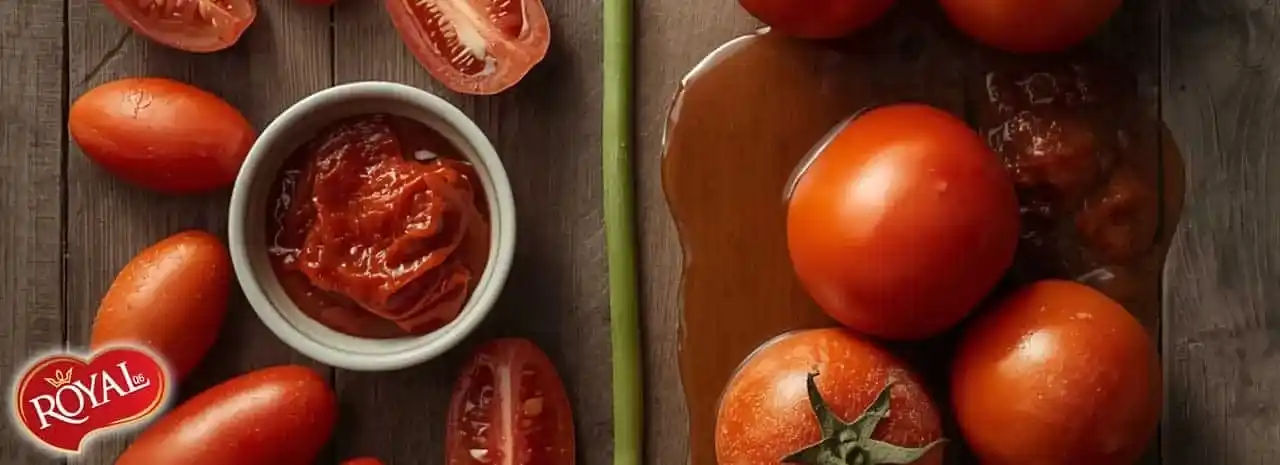
Types of Tomatoes
There are generally two types of tomatoes on the market; local and greenhouse tomatoes, each of which has its advantages and disadvantages. Local tomatoes produce less paste, but they prevent it from going stale and spoiling. Greenhouse tomatoes are more expensive than regular tomatoes, but they produce more paste. Typically, 10 to 15 kilograms of paste are obtained from every 100 kilograms of fleshy and delicious tomatoes.
But from another perspective, it is interesting to know that there are more than 7,500 varieties of tomatoes, which differ in shape, size, color and taste. Each has its own use and its own customer. Tomatoes usually have a more uniform shape and appearance, but there are many differences in taste. Therefore, choosing the right tomato for taste is very important. Some of the most common tomato varieties are:
- Polish: This tomato is, as the name suggests, a Polish tomato. It was brought to New York by a Polish gardener in the 1800s.
- Amish Paste: This tomato has a sweet taste and a fresh aroma. This tomato can grow to 224 to 336 grams.
- Opalka: This Polish tomato is much sweeter than other tomatoes. It is a slightly larger tomato, similar in shape to a pepper, and the fruits grow to 4 to 6 inches.
- Marvel: Produced by a Spanish company and suitable for non-greenhouse cultivation.
The Largest Tomato Varieties
- Jersey Doyle: This tomato is the largest type of tomato and grows in the shape of a banana. On the other hand, it is very juicy and has a good flavor.
- Big Mama: This tomato is also fleshy and very large. These tomatoes grow wider. That is why they are oval in shape.
- Jersey Great: One of the rarest tomato varieties, they are not very available and are usually not used.
You may be thinking to yourself that most of the tomatoes on the market are Iranian products and how one can divide the types of tomatoes into the above. But we should say that producers name the types of tomatoes according to their seeds and the country that produces these seeds.
What Is Paste Suitable Tomato?
A tomato paste is a term that is used colloquially for tomatoes suitable for the production of tomato paste. One of the concerns of tomato paste producing companies is the selection of quality and suitable tomatoes. Because producers use no other additives except for the paste and 5% salt in the production of tomato paste, the quality of the final product depends entirely on the tomatoes. So, if producers do not use good tomatoes for cooking the paste, the quality will decrease significantly. Therefore, choosing quality tomatoes is the first thing a producer must do to cook the paste.
Difference Between Tomatoes for Paste & Other Tomatoes
Tomato paste tomatoes are generally different from other tomatoes in that they have less water content and usually fewer seeds. However, most types of paste tomatoes are elongated. Since they have a lower water content and a more intense flavor, other tomatoes are full of water. So it is much easier and faster to chop, cook or juice paste tomatoes for a thick paste.
Paste tomatoes are usually fleshier than regular tomatoes and have a firmer texture. Other reasons to choose paste tomatoes include higher yield and pigments, which result in better paste color, as well as higher resistance to diseases.
The type of tomato seed will play a very important role in the quality of the tomatoes. Paste tomatoes generally include the most popular and best tomato seeds, including Roma, Plum, Marconia, Leonardo and Marvel. Although each is unique in shape and size, they all offer one thing: juicy flesh with thick walls and small seed sacs, which ensures that tomato paste delivers a delicious flavor.
As the main ingredient of paste, tomatoes have a direct impact on the flavor, color, consistency, and shelf life of the final product. A fleshy, high-quality tomato not only increases the paste production efficiency, but also makes the paste have a better aroma and flavor and is more nutritionally rich. Meanwhile, organic tomatoes have higher nutritional value and are more beneficial for health due to the absence of chemical pesticides. On the other hand, choosing the wrong tomato can result in a watery, pale, or even moldy paste.
Importance of Choosing the Best Tomato for Paste
As the main ingredient of paste, tomatoes have a direct impact on the flavor, color, consistency, and shelf life of the final product. A fleshy, high-quality tomato not only increases the paste production efficiency, but also makes the paste have a better aroma and flavor and is more nutritionally rich. Meanwhile, organic tomatoes have higher nutritional value and are more beneficial for health due to the absence of chemical pesticides. On the other hand, choosing the wrong tomato can result in a watery, pale, or even moldy paste.
Characteristics of Suitable Tomatoes for Tomato Paste
The best tomatoes for paste are always freshly harvested. This is true for all breeds. Freshness is the most important factor. Because fresh tomatoes are able to retain their beneficial properties and because they have reached the producer directly from the garden and farm, they are less contaminated. Tomatoes used for paste production should be very ripe, red and vibrant in color, and several important factors play an important role in their quality, including the following:
- Color and appearance: Tomatoes should have a bright red color. This color indicates the amount of lycopene in them. Deep red tomatoes usually taste better. This characteristic even makes the final color of the paste more attractive. Unripe tomatoes (green or yellow) or tomatoes with unnatural spots may affect the taste and color of the paste. The tomato plant should also have a green stem. You can evaluate the storage conditions of the tomato through its stem. If the stem is dry and yellow, the growing conditions are not right.
- Skin: Thin-skinned tomatoes are the best for paste. However, if you are using thick-skinned tomatoes, you should remove the skin before using them, as thick skin reduces the quality of the paste. Tomatoes should also have smooth skin and no blemishes. Contrary to popular belief, poor-quality, bruised tomatoes should be used for paste. Avoid buying tomatoes with wrinkled skin or black spots, as these may be signs of spoilage or disease. If you are looking for quality paste, choose healthy, unblemished tomatoes. Blemished tomatoes are usually bacteria and fungus and may also have white flesh.
- Texture: Tomatoes used for paste should have a good texture. Very soft, fleshy tomatoes are best for paste. Tomatoes should not be too hard or too soft. Fleshy tomatoes are very suitable because they have fewer seeds and water and a denser texture. This feature allows producers to obtain a larger volume of highly concentrated paste during the cooking process. One should avoid choosing crushed, spoiled, and moldy tomatoes because they are not healthy and will spoil the taste of the paste.
- Flavor and aroma: Tomatoes that have a strong, sweet and earthy aroma are suitable for making paste compared to other tomatoes. Organic tomatoes usually have a stronger flavor and aroma. Local and seasonal tomatoes are the best choice in this regard. Because these tomatoes have a more authentic flavor due to their growth in natural conditions.
- Weight and shape: The more appropriate and heavier the tomato is, the juicier it is. However, ripe and unripe tomatoes will seem lighter. Medium to large, elongated tomatoes are often the best choice for paste. Varieties like San Marzano are a perfect example. They have thinner skins, which makes them easier to cook down.
Right Price for Tomatoes for Paste
One of the main concerns when buying tomatoes for industrial paste production is their price. Of course, the right price does not mean the cheapest option, but there must be a balance between quality and cost. Tomatoes that are too cheap may be of poor quality or have been grown with chemical pesticides. However, to save money, it is better to consider the following in this regard:
- Compare prices: When choosing and buying tomatoes, you can check the types of products from different producers and choose the best option after comparing their price and quality. Of course, the price of organic tomatoes may be slightly higher, but their nutritional value and better taste justify the cost.
- Buying season: Tomatoes are usually cheaper and of better quality in the summer (June to September) because it is the harvest season.
- Buying in bulk: For large-volume paste production, buying in bulk from local farms or reputable stores can reduce costs.
Best Time to Buy Tomatoes for Making Paste
Although consumers can purchase tomatoes year-round, farmers only harvest high-quality tomatoes between the months of August and October. Another important point is that tomatoes have weaker pigments during the cold season due to less sunlight. Therefore, experts do not recommend them for making paste. In addition, the price of tomatoes in the winter is not economically justified.